Where to Buy Bass Guitars: Tips for Every Player
There is a moment in every bassist's life when the instrument you have no longer matches what you hear in your head. Maybe you started on a hand-me-down with fret buzz above the twelfth fret, or you have saved enough to move from a beginner model to something that sits properly in a mix. When that moment arrives, knowing where to buy bass guitars and how to evaluate your options makes the difference between a purchase you celebrate and one you learn to tolerate.
I have been on both sides of that counter. Over the years I have walked into a local music store with no intention to spend money and left with a used Music Man StingRay that I still play weekly. I have also clicked through online listings late at night, talked myself into a Warwick that looked great in photos but never felt right in my hands. The process of buying a bass guitar has changed, but the fundamentals of a good decision have not.
Why the Buying Process Matters More Than You Think
A bass guitar is not a passive piece of gear. It is the bridge between rhythm and harmony, the thing that makes a drummer and a guitarist sound like a band. If the instrument does not fit your hands, your tone, or your playing style, every session becomes a fight. That is why the question of where to buy bass guitars is not just about price or convenience. It is about finding a setup that lets you forget the gear and focus on the music.
I have seen players fall in love with a Fender Precision Bass that felt dead in someone else's hands, and I have watched a Gibson EB bass sit on a shelf for months because the owner never bonded with the neck profile. The instrument chooses you as much as you choose it. That is a cliche, but it is a true one.
Local Music Stores: The Undeniable Advantage of Touch
If you have a good local music store within driving distance, start there. Even if the selection is not huge, being able to hold the instrument matters. You can feel the weight, check the neck relief, and hear how the unplugged acoustic tone rings. A maple fretboard feels different from a rosewood fretboard under your fingers, and that difference matters when you are playing for hours.

I remember testing a Yamaha BB series bass at a small shop in Portland. The salesperson handed it to me without a word, let me plug into a modest bass amplifier, and left me alone for twenty minutes. That kind of low-pressure environment is rare, but when you find it, it is worth your loyalty. Local stores also often have used gear that does not appear online, and they can usually do a basic setup before you walk out the door.
The downside is price. Small shops cannot match the discounts of big online retailers, and their stock is limited. But if you value the ability to try before you buy, a local music store is the best place to start.
Online Marketplaces: Depth of Choice
When you know exactly what you want, online platforms like Reverb, Sweetwater, and Thomann offer an overwhelming range. Reverb is particularly strong for used and vintage gear. I found a late-70s Rickenbacker 4001 on Reverb a few years ago. The seller had detailed photos of every scratch and a video showing the electronics worked. I still play that bass today, and the transaction was smooth.
Sweetwater leans toward new gear and customer service. Their sales engineers know the product lines. If you call and say you are torn between active pickups and passive pickups, they can walk you through the tonal trade-offs without rushing you. Thomann, based in Germany, is excellent for European buyers and carries brands like Warwick and Ibanez at competitive prices.
The catch with online buying is that you cannot feel the instrument before you pay. Return policies help, but shipping a bass back is a hassle. I have done it twice. Once for a bass that arrived with a cracked headstock, and once because the neck profile was thicker than I expected. Both times the seller refunded me, but I lost a week of playing time.
What to Look for in a Bass Guitar
Before you hand over your money, have a clear idea of what you need. Here are a few things I check every time.
- Neck feel: A maple fretboard tends to feel brighter and slicker under the fingers, while a rosewood fretboard offers a warmer, slightly grippier surface. Neither is better, but one will suit your style more.
- Pickup type: Active pickups give you more output and tonal control through an onboard preamp, but they require a battery. Passive pickups are simpler, more dynamic, and less prone to failure on stage.
- Weight and balance: A bass that hangs neck-heavy will tire your shoulder by the third set. Always test with a strap at playing height.
Budget Considerations and Hidden Costs
When you plan to buy bass guitars, the price tag is only the beginning. You will need a bass amplifier that matches the instrument's character. A compressor pedal can even out your dynamics, and a tuner pedal is non-negotiable for live work. A DI box is also useful if you plan to record direct or send a clean signal to the front of house.
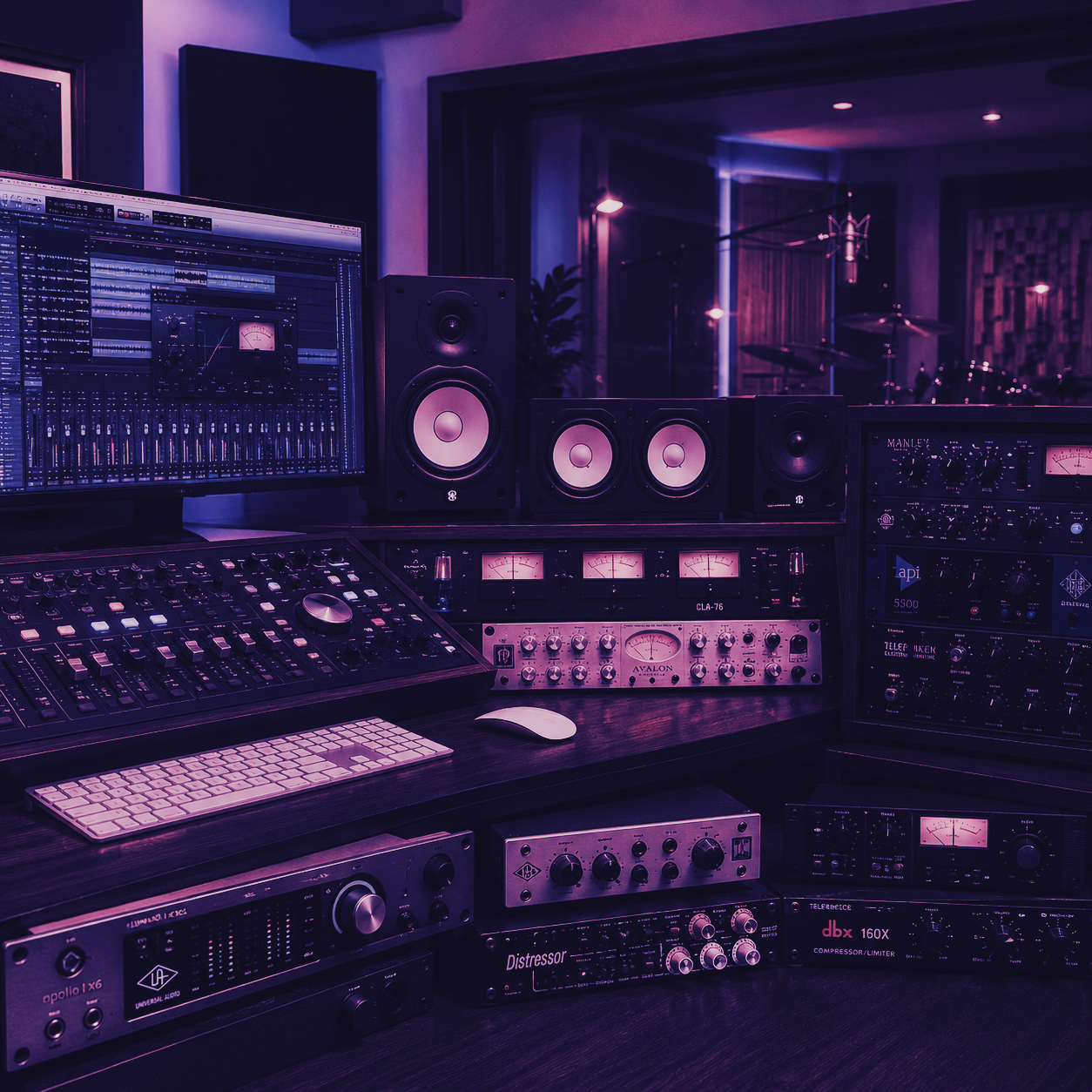
I have seen players spend two thousand dollars on a bass and then plug into a practice amp that sounds like a box of bees. That is a mismatch. Your amp is half your sound. A good rule is to spend at least as much on the amplifier as you do on the bass. If your budget is tight, look for a used amp from a reputable brand. Sweetwater and Reverb both have strong used sections.
Recording at home adds another layer. A simple interface and a DAW like Reaper DAW let you dial in tones that would have required a studio visit twenty years ago. Reaper is affordable, stable, and widely used by professionals. I have tracked entire EPs with it using nothing more than a DI box and a few plugin amp sims.
When to Trust Photos and When to Walk Away
Online sellers know that lighting hides flaws. If a listing for a used Ibanez or Yamaha shows only three photos, all taken from the same angle, ask for more. Focus on the fretboard, the bridge, and the electronics cavity. A bass that has been stored in a damp basement will show corrosion on the screws and tarnishing on the frets. Those are red flags.
I once bought a Music Man from a seller who provided a video of every fret being played. That level of detail told me they cared about the instrument. The bass arrived exactly as described. On the other hand, I have walked away from listings where the seller could not or would not answer basic questions about the neck relief or pickup height. If they do not know, there is probably a reason.
The Role of Brand Reputation
Fender and Gibson have been making basses for decades. Their designs are proven, and replacement parts are everywhere. Ibanez and Yamaha offer consistent quality at lower price points. Warwick and Music Man have more distinct voices and tend to hold their value. Rickenbacker is iconic but polarizing. Some players love the chime, others find the narrow neck uncomfortable.
I have owned basses from most of these brands. My main player is a Fender Jazz Bass with passive pickups and a maple fretboard. It sits in a mix without effort. But I have friends who swear by Warwick's growl or Ibanez's fast necks. There is no universal best. There is only what works for your hands and your music.
Making the Final Decision
When you are ready to buy bass guitars, whether from a local shop or a site like Reverb or Sweetwater, take your time. Read the return policy. Check the shipping insurance. If the deal seems too good, it probably is. A bass that is priced well below market value often has a hidden issue, and a hidden issue on a bass is not a bargain, it is a project.
I have made mistakes. I bought a Warwick once because I loved the way it sounded on a recording, but the neck was too wide for my hand. I sold it six months later at a loss. That lesson cost me money, but it taught me to trust my hands more than my ears when shopping.
Your first bass or your tenth bass, the process should feel the same: deliberate, patient, and honest about what you need. The right instrument will make you want to play more. And that, in the end, is the only metric that matters.